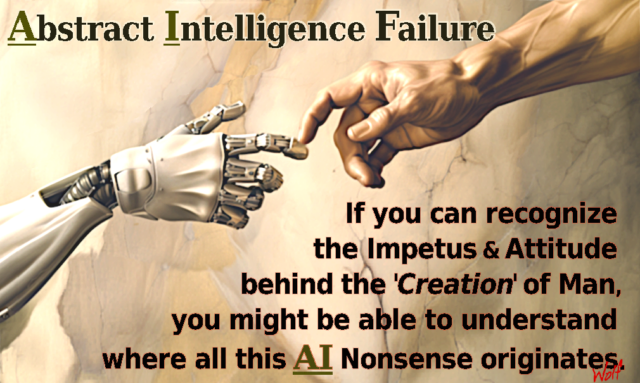
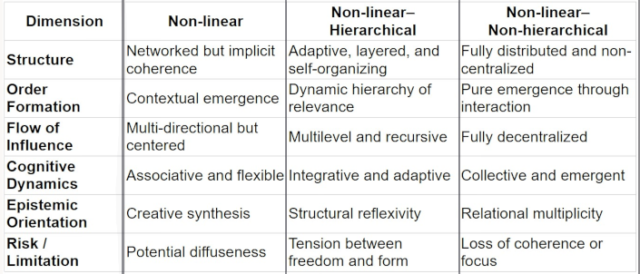
A triadic model (non-linear → non-linear–hierarchical → non-linear–non-hierarchical) toward the ‘Next’:
a stream of collective consciousness – characterized by fluency, dynamism, and sympoiesis (co-creative becoming).
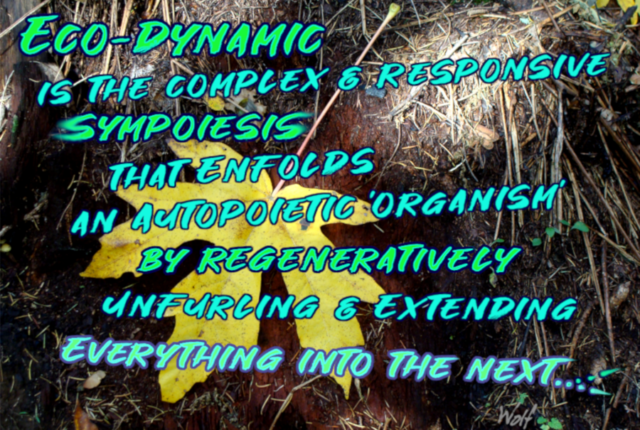
A non-linear cognitive context refers to a mode of thinking characterized by flexibility, creativity,
and associative reasoning, wherein cognitive processes fluidly integrate experiences, ideas, and
conceptual domains in a dynamic, non-sequential manner.
Rather than adhering to a prescribed, step-by-step logic, non-linear cognition operates through patterns
of emergence, resonance, and contextual interrelation.
This stands in contrast to linear cognition, which is predominantly sequential,
deductive, and dialectically constrained.
Non-linear cognition engages a more integrative neural and psychosocial framework, synthesizing
social–emotional reciprocity with instrumental rationality, divergent thinking, and creative association.
By enabling the formation of novel linkages among seemingly disparate domains, it fosters the conditions
for innovative insight, complex problem-solving, and transdisciplinary understanding.
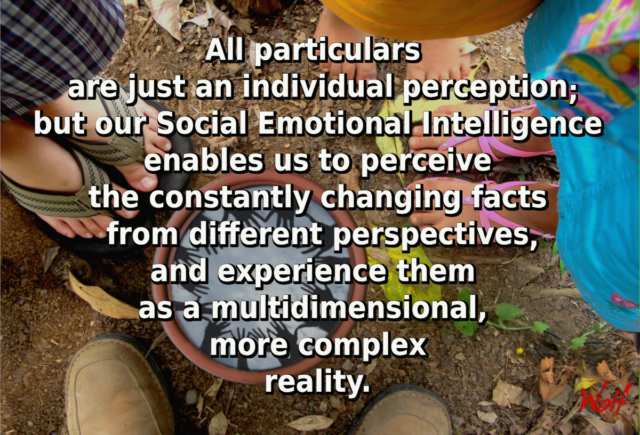
Linear Thinking
Definition and Directional Orientation:
Linear thinking refers to a sequential, analytical, and deductive mode of cognition in which reasoning
proceeds along a direct and ordered pathway. Each thought or inference builds logically upon the previous one,
adhering to principles of causality, hierarchy, and progression.
Characteristics:
1. Sequential Logic – Linear cognition advances step-by-step, privileging order,structure, and predictability.
2. Reductionism – Complex phenomena are broken down into discrete, manageable components for analysis.
3. Causality and Determinism – Emphasis is placed on cause–effect relationships and definable outcomes.
4. Goal-Orientation – Linear thought tends to move toward specific objectives or conclusions, favoring closure over ambiguity.
5. Rational Consistency – It values coherence, consistency, and adherence to established rules of logic.
6. Temporal Directionality – Operates within a temporal flow (past → present → future), reflecting a mechanistic
or industrial model of reasoning.
Applications and Limitations
Linear thinking underpins scientific method, technological design, bureaucratic systems, and formal logic.
While it enables clarity, efficiency, and replicability, it often struggles with complexity, paradox,
and ambiguity—realities that defy fixed categories or predictable causality.
Non-linear Thinking
Definition and Trajectory:
Nonlinear thinking constitutes a cognitive mode characterized by flexibility, creativity, and associative
reasoning, wherein cognitive processes fluidly integrate experiences, ideas, and conceptual domains in a dynamic,
non-sequential manner. Rather than following a prescribed, step-by-step logic, nonlinear thought evolves through
patterns of resonance, emergence, and contextual association.
This mode of cognition departs from linear, reductionist models by emphasizing pattern recognition, simultaneity,
and relational understanding. It reflects the eco-dynamics of complex adaptive systems, where insight often emerges
through the interplay of multiple, interacting variables rather than through deductive progression.
Characteristics:
1. Associative & Multi-directional Flow – Ideas are generated through spontaneous associations, analogies,
and contextual shifts rather than linear inference.
2. Holistic Integration – Emphasizes relationships and patterns across domains rather than isolated parts.
3. Flexibility & Adaptivity – Responds dynamically to new information, allowing for constant reorientation & reinterpretation.
4. Emergent Coherence & Complexity – Knowledge and insight emerge from the interplay of multiple, often unpredictable factors.
Meaning arises holistically from context, not from pre-defined sequences and algorithms
5. Divergent Thinking – Encourages exploration of multiple possibilities simultaneously.
6. Tolerance for Ambiguity & Paradox – Accepts uncertainty as an inherent condition of complex but dynamic systems
and an essential part of creative and reflective processes.
7. Trans- or Interdisciplinary – Draws from diverse fields and experiences, dissolving boundaries between
disciplines and epistemologies.
8. Contextual Adaptivity – Continuously reframes understanding as new perspectives emerge.
Implications:
Nonlinear thinking is foundational for trans-disciplinary inquiry, creative problem-solving, systems theory,
ecological modeling, and integrative consciousness studies.
It accommodates complexity and interdependence, and is fostering integrative insights that transcend the
limitations of purely sequential analysis; It stimulates innovation, ethical reflection, and collective intelligence.
However, its openness can appear diffuse or indeterminate when assessed through strictly linear standards of logic and proof.

Non-linear–Hierarchical Thinking
Definition, Orientation and Trajectory:
Non-linear–hierarchical thinking constitutes an evolution of nonlinear cognition in which associative processes
are contextually structured by adaptive, self-organizing hierarchies. Cognitive processes still integrate experiences,
ideas, and conceptual domains dynamically and non-sequentially, yet they do so within a fluid hierarchy of relevance
and abstraction that maintains coherence amid complexity.
This model blends the emergent qualities of nonlinear cognition with the structural organization of hierarchical systems,
allowing thought to move freely between levels of detail and generality. It reflects ecological and neural principles
in which organization arises through interaction rather than imposition.
Characteristics:
1. Emergent Order – Hierarchies develop organically from relational dynamics rather than predetermined rank.
2. Layered Integration – Distinct cognitive domains (rational, emotional, intuitive) interconnect without collapsing into uniformity.
3. Recursivity and Feedback – Continuous loops between abstract and experiential levels refine understanding.
4. Adaptive Structuring – Hierarchies shift fluidly in response to changing contexts or informational inputs.
5. Meta-Cognitive Oversight – Awareness of one’s own cognitive layering enables reflective navigation between structure and spontaneity.
6. Systemic Resonance – Reflects the balanced, self-regulating properties of ecological and cognitive ecosystems.
Implications:
Nonlinear–hierarchical thinking provides a synthetic framework that reconciles intuition with analysis,
freedom with structure, and multiplicity with coherence. It is particularly relevant to collective intelligence,
ethical AI applications, and trans-disciplinary systems, where coordination across multiple levels of abstraction
is required without suppressing diversity or emergence.
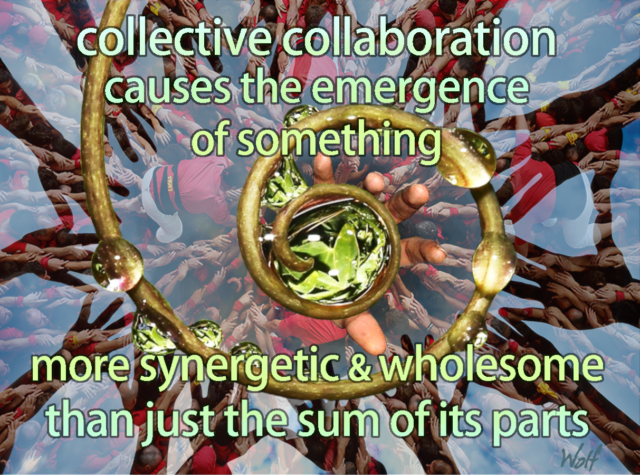
Non-linear–Non-hierarchical Thinking
Definition and trajectory:
Non-linear–non-hierarchical thinking constitutes a radical extension of nonlinear cognition, wherein
all hierarchical distinctions are dissolved in favor of distributed, network-based interrelations.
Thought proceeds through a flat topology of associations, where meaning arises from interconnectivity
rather than order, and where no single perspective, value, or domain holds structural primacy.
This cognitive model parallels decentralized systems in nature and technology—such as mycelial networks,
peer-to-peer architectures, and collective consciousness—where agency is distributed,
and emergence replaces command or control.
Characteristics:
1. Distributed Cognition – Thought emerges collectively through interactions rather than from centralized authority.
2. Radical Interdependence – Every element contributes to the whole without hierarchical separation.
3. Emergent Coherence – Patterns arise spontaneously through interconnection rather than top-down design.
4. Multiplicity of Perspectives – Encourages epistemic pluralism and co-creative participation.
5. Fluid Boundaries – Disciplines, roles, and categories are porous and constantly redefined through interaction.
Implications:
Non-linear–non-hierarchical thinking exemplifies networked intelligence and ecological consciousness.
It enables distributed innovation, open collaboration, and the dissolution of centralized epistemic control.
However, its openness also demands new forms of ethical coherence and communicative coordination to prevent
conceptual diffusion or systemic fragmentation.
Remember :
and